
Paul Hobbs: The Farmer Who Became a Global Wine Icon
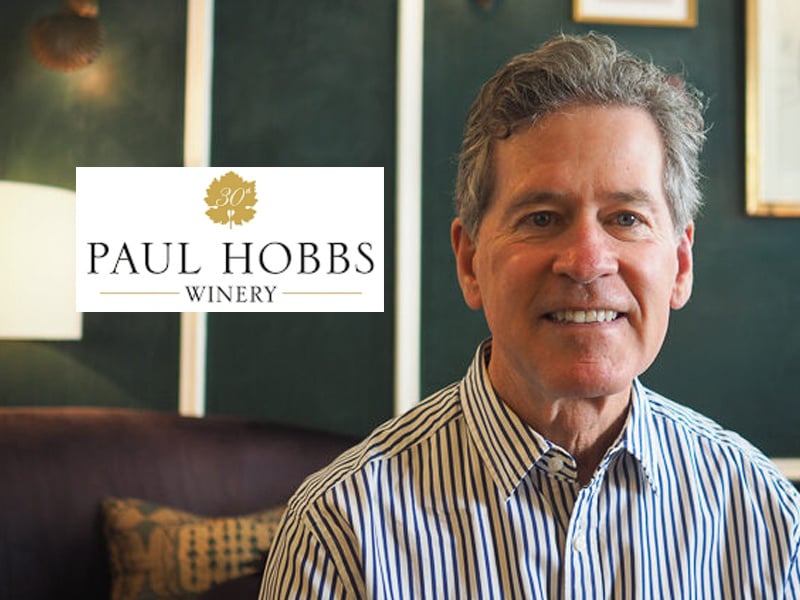
In the world of fine wine, few names carry the same weight as Paul Hobbs. Revered for crafting world-class Cabernet Sauvignon, Chardonnay, Pinot Noir, and for helping elevate wine regions across multiple continents, Hobbs has become one of the most respected winemakers of his generation. Yet the story of Paul Hobbs does not begin in Napa Valley tasting rooms or among collectors chasing 100-point scores. It begins on a fruit farm in upstate New York, where hard labor, cold winters, and a deep connection to the land shaped the philosophy that would define his career.
Today, Hobbs is known as a pioneering vintner, consultant, and founder of multiple acclaimed wine brands. But at his core, he still describes himself in the simplest terms possible: a farmer.
Paul Hobbs was born in western New York near Niagara, where his family farmed along the shores of Lake Ontario. The Hobbs farm, established by his great-grandmother, focused primarily on apples and other fruit crops. It was not a glamorous childhood. Farming meant long hours, relentless seasonal pressure, and work that did not stop when school ended.
As a young man, Hobbs believed farming was something he would eventually leave behind. Like many children raised on working farms, he saw firsthand the sacrifices required to survive in agriculture. Yet those early years gave him something more valuable than he realized at the time: An instinctive understanding that great fruit is the foundation of everything. That lesson would later become the cornerstone of his winemaking philosophy.
Now Hobb’s mother was against any kind of alcohol. Which is kind of ironic that he went in to wine making but here is how it happened. His father was seeking new agricultural opportunities, because farming fruit trees was not going to make it. He had begun exploring grape growing as an alternative crop. One evening, he served the family a mysterious golden liquid in Dixie cups and asked them to describe what they tasted. Hobb’s mother said it tasted like apricots and peaches. Only afterward did they learn the liquid was a bottle of 1962 Château d’Yquem, one of the world’s most famous sweet wines.
For Hobbs, the experience was transformative. Until then, wine had been abstract and distant. In that moment, it became something profound—capable of complexity, beauty, and emotion. It also connected directly back to farming. Fruit, climate, soil, and human hands could become something transcendent. That revelation changed the course of his life.
Initially, Hobbs planned to attend medical school. But his dad encouraged him to give winemaking a dry and enroll at UC Davis. About his senior year, Hobbs took a course in botany from a professor who also taught a wine appreciation course. It was not too long before it came out that Hobb’s dad had a vineyard he was planting. The professor and Hobb’s father collaborated to get Hobbs to change into an enology program.
At first, Hobbs was terrified as he had no idea about wine and many of his classmates had come from established wine families or already possessed deep knowledge of wine. Hobbs, by contrast, was a farm kid from New York with little formal wine experience. But what he lacked in pedigree, he made up for in work ethic, curiosity, and agricultural intuition. UC Davis gave Hobbs the scientific framework to pair with his farming roots. He learned fermentation chemistry, microbiology, sensory analysis, and vineyard management. More importantly, he discovered that great winemaking was both art and science.
After graduating, Hobbs joined the Robert Mondavi Winery, one of the most influential wineries in California history. There he learned at a high level during a period when Napa Valley was rapidly evolving into a world-class wine region.
Hobbs worked long nights in the cellar and embraced every challenge. His diligence and technical skill eventually earned him a role on the inaugural winemaking team for Opus One (1979), the famed partnership between Robert Mondavi and Baron Philippe de Rothschild. Hobbs learned the lingo and could talk confidently about phenolics, chemistry, and all the things he had been studying. This exposure to international standards of excellence reinforced the idea that California wines could stand beside the greatest wines in the world.
After a while of working for Mondavi, Hobbs felt there was no more upward management mobility. Zelma Long returns to his life (after having been also at Mondavi, but they would not hire him directly) offering Hobbs a winemaker position at Semi Winery (1984). Zelma and Dave Ramey had just pulled in a harvest and wanted to create a wine similar to Opus and Hobbs had the inside knowledge. Hobbs helped to start the Cabernet Sauvignon program. During this period, he sharpened his expertise in Cabernet Sauvignon and premium red wine production while also gaining management experience. Zena called in the big dog, Robert Parker, top French and Bordeau consultant to get the French slant for California wines.
But Hobbs did end up climbing the corporate ladder. Simi Winery was owned by Schieffelin & Somerset which were importers of Moet Chandon out of New York City. So Hobbs found himself as a Senior Vice President going to boring meeting all day long. He wanted independence, creative control, and a chance to build something meaningful on his own.
He started to think he wanted his own vineyard but viticulture has an intense startup capital requirement. Hobbs started to make inquires on where he could go to really make a difference, Chile. Back in med school, Hobbs had a friend, Marcelo Kogan who had earned his PhD and had returned back to Chile as a teaching professor. Marcelo had organized a trip for Hobb. Hobbs had invited another friend, Jorge Catena from Argentina, to join Hobbs (1988). Apparently, there was a bit of miss communication with Kogan and in the end both Hobbs and Catena were kicked out of Chile. Where to go next? Well, Mendoza to Catena’s family vineyard.
What he saw stunned him. The vineyards were capable of greatness, yet this was the worst wine consumed. At this point in history, Argentina had been isolationist and were not able to bring in good equipment. Catena introduced Hobbs to his brother Nicolás Catena. Now Nicolás had been trying to get consultants, professors, and other winemakers to adjust the style of wine to make it something good and nothing was working. So Paul and Nicolás made a deal. The 1989 harvest was soon to be picked. Paul had promised to spend two weeks of his vacation time coming back down to Mendoza and working with the team, as long as it was between the two of them.
Nicolás didn’t hold to his word. When Paul returned to California, Paul had an ultimatum from Simi Winery. Either cut ties with Catena or cut ties with them. (Which was what Nicolás had wanted all along). Paul had already fallen in love with the culture and people of Mendoza. And there he was, working in Argentina.
Together, they modernized vineyard practices, introduced new barrel programs, improved cellar techniques, and pursued higher quality standards. Nicolás wanted to make Chardonnay. And somehow they got French barrels in the country for aging wine. Paul had taken some finished Chardonnay to a blind tasting competition in California to see how it would stack up. And it came in second place over all, which was a huge incentive to say Argentina wines could be world class.
Parrellel to this, Nicolás’s business connections and economic insight came to light that the isolationism was coming to an end. Meaning that at some point soon, Argentina would be open to export wine and Catena Winery could be on the front wave.
Going back to a vineyard and winery needs capital. Paul helped to make Catena successful. Nicolás returned the favor to help Paul by becoming a partner in Paul Hobbs Winery which opened in 1991. Yes, Nicolás put Paul in a pickle for “trapping him” but made good.
Paul began modestly, purchasing fruit from elite growers and producing small lots of Chardonnay, Pinot Noir, and Cabernet Sauvignon.
So Paul became more of a consultant to Catena as he was working on is new California Winery. In trips down to Mendoza, Hobbs came to recognize something many overlooked at the time: Malbec could be exceptional. That insight helped reshape Argentina’s global reputation. Nicolás wanted to produce Chardonnay and Cabernet Sauvignons because that’s what is most familiar with world buyers. Now Nicolás spent most of his time in Buenos Aires. Paul found a corner of the property and started a bit of malbec. Paul aged the malbec in American oak barrel, coopered in France. And some how the US press published a whole big article naming Catena Wines as producing some of the first world class malbec. Hobbs of course was the importer. Tit for tat was answered!
Back in California, Paul was making wines that reflected precision, purity, and vineyard expression. He was among the early modern California winemakers to emphasize balance and site specificity rather than sheer ripeness or power. As acclaim grew, so did the winery. Paul Hobbs wines became staples on top restaurant lists and in collectors’ cellars. Critics praised their depth, structure, and elegance. Paul also was growing a health consulting business to winery like Swanson and Stag’s Leap, Lewis Cellars and a few others.
Then Paul had been asked to consult for a winery in Spain. How is that going to work having never been to Spain? Then it was Tokaji, Hungary. Paul did six years consulting in Hungary in the early 2000s. What Paul had found from talking to people in places he had little experience was that there were communities and methodologies and techniques that could be customized to that location’s situation. The strongest training was at Robert Mondavi but there the winery and the vineyard managers were never blended. Out in the field Paul made holistic differences that add more value to the wineries than what Paul could have ever thought.
In 2000, Hobbs launched CrossBarn, a second label designed to offer more approachable wines at lower prices while maintaining quality standards. CrossBarn also allowed Hobbs to work with younger vineyards and new growers, often helping them improve farming practices over time. It reflected another side of his philosophy: Excellence does not have to be limited to luxury bottlings.
Paul’s connection to Armenia began unexpectedly in the early 2000s through an email exchange with the Yacoubian family, led by brothers Viken and Vahe Yacoubian. The relationship began when Viken, deeply impressed by a bottle of Hobbs’ Pinot Noir, reached out to the winery—an exchange that quickly developed into a personal friendship. Intrigued by Armenia’s little-known but ancient winemaking history, Hobbs accepted an invitation to visit in 2005. During that trip, he and the Yacoubian brothers traveled across multiple regions, including much of the country’s wine country, where he recognized the untapped potential of Armenia’s vineyards, soils, and indigenous grape heritage.
By 2008, this shared vision formalized into a partnership, with Hobbs and the Yacoubian brothers establishing a collaborative winemaking project rooted in Vayots Dzor. Since then, Hobbs has traveled to Armenia several times a year to work directly in the vineyards and winery alongside the local team, refining farming practices and elevating quality standards. Their goal has been not only to produce exceptional wines, but to help redefine the global perception of Armenian wine by honoring its ancient origins while advancing its modern identity. The collaboration is deeply tied to place, with vineyards planted near the historic Areni-1 cave which is considered one of the world’s oldest known wineries, symbolically linking Armenia’s 6,000-year winemaking history with its present and future on the global wine stage.
Paul Hobbs once said that thirty-five consulting clients was the absolute limit of what one person could responsibly support, guide, and still give real attention to. That number alone reveals the scale of a man who learned how to live as a bi-hemispheric traveler, moving with the seasons from harvest to harvest across the globe. Yet despite the miles, the acclaim, and the reach of his influence, Hobbs has remained grounded in the same question that first carried him from apples to wine: Where can great fruit become great wine? More importantly, he has reminded the wine world that prestige does not begin in a glossy label, a luxury tasting room, or a critic’s score—it begins in farming. Ask Paul Hobbs who he is, and the answer is rarely “celebrity winemaker.” It is something far simpler and far more telling: A farmer who learned to listen to vineyards. In an industry often fueled by ego and image, that humility may be his greatest achievement. From a family orchard in New York to vineyards across continents, Paul Hobbs built a career on one enduring truth: Great wine is grown first, then made.

Comments
Be the first to comment...