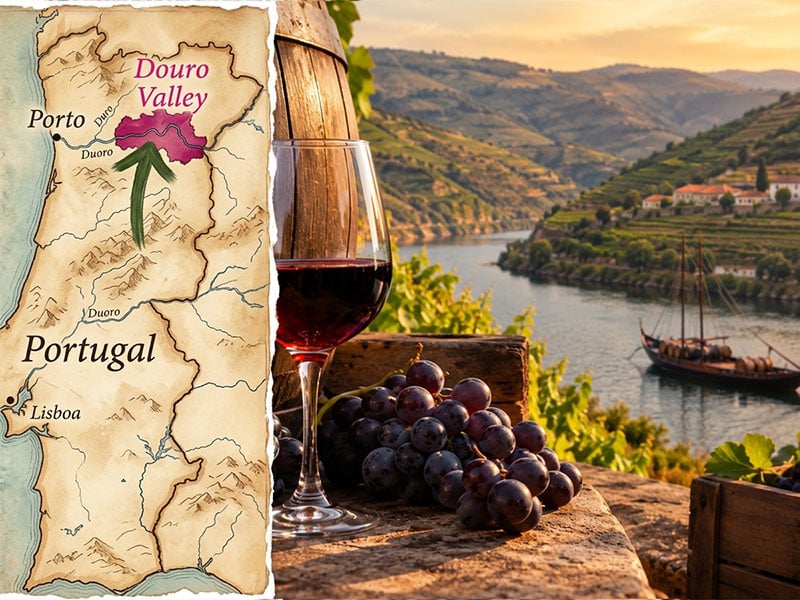
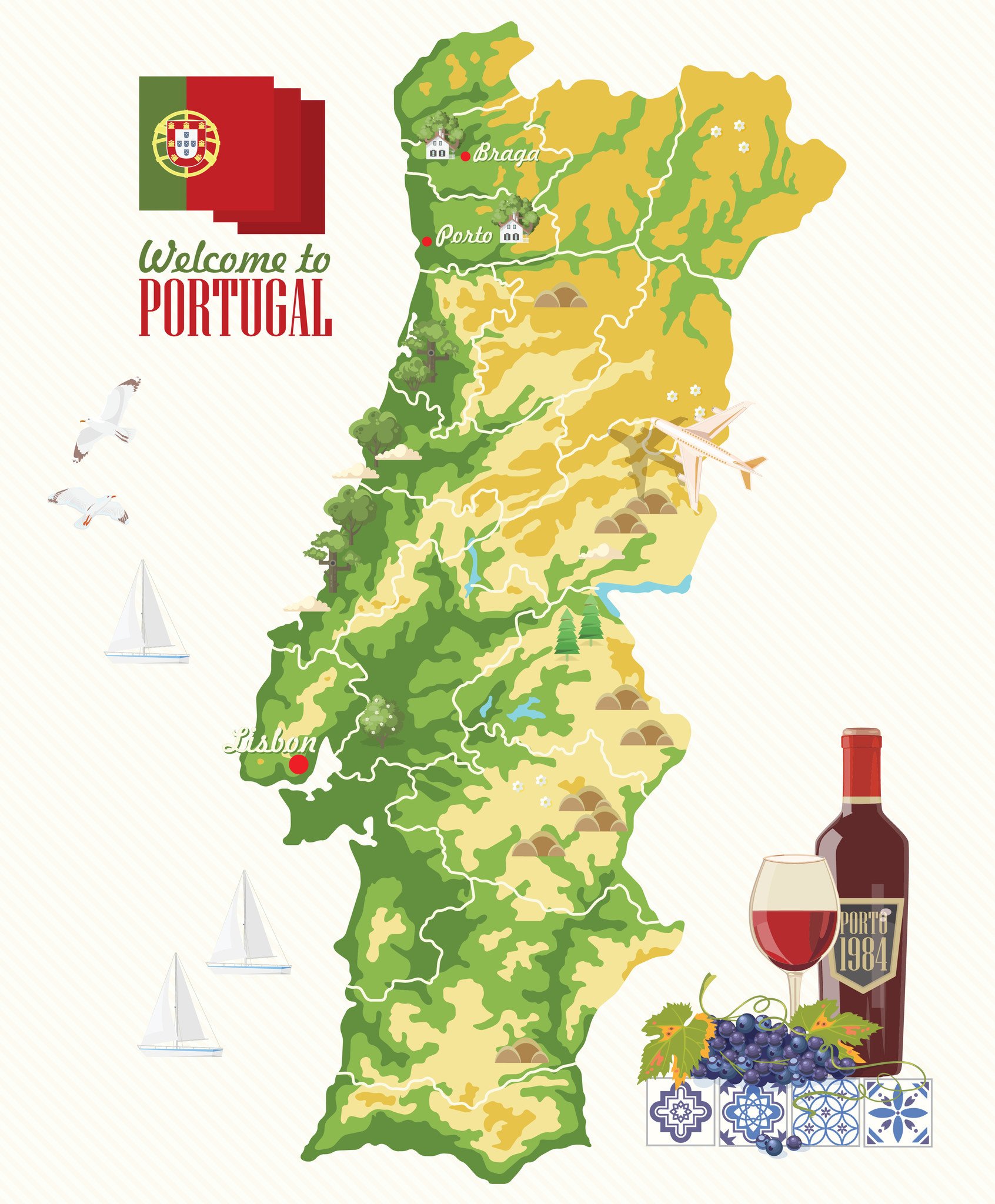
Port has a bit of a reputation. Maybe you think of it as the little glass of something sweet that appears at the end of a big dinner. Maybe you know there is Ruby Port and Tawny Port. Maybe you’ve heard that it comes from Portugal and that it is fortified. And honestly? That’s a pretty good place to start. But Port is a much bigger story than Ruby and Tawny.
This week, City Vino explores a bit of the Iberian Peninsula with its weekly wine tasting on Friday October 14th, and Saturday October 15th. It is indeed interesting to get to know a little bit about a region from its wines, but let us share some non-wine related information with you. (There will be no quiz. I promise.)
There are actually a wide variety of fortified wines in the world, for which Port is just one kind. But it is a special one, and of the fortified wines, it is the oldest. Fortifying means that a grape spirit, or brandy, is added to the wine to help preserve it. The brandy is added during fermentation, which then kills the yeast as the yeast can only survive in an environment that is just so high in alcohol. This means that wine retains its sweetness. From here, the wine goes into a series of ageing containers. Depending on how long the ageing process is, the wine maker is making Ruby or Tawny port.
Discover the Portuguese varieties Castelão, Touriga Nacional, Tinta Roriz, or Tempranillo, Baga, Trincadeira, and Padeiro, as well as their growing regions!
Portugal is home to over 250 native grape varieties. These are referred to as “Autochthonous Grapes,” since they are indigenous to the place where they are found. Most of the grapes found in Portugal are not found or planted in other regions of the world.