
Port Is More Than Ruby and Tawny
- Posted on
- Posted in tempernillio, tinta barroca, Tinta Roriz, Touriga Franca, Touriga Nacional
- 0
Port has a bit of a reputation. Maybe you think of it as the little glass of something sweet that appears at the end of a big dinner. Maybe you know there is Ruby Port and Tawny Port. Maybe you’ve heard that it comes from Portugal and that it is fortified. And honestly? That’s a pretty good place to start. But Port is a much bigger story than Ruby and Tawny.
Port is one of the world’s fortified wines, a wine to which grape spirit is added during fermentation. That spirit raises the alcohol high enough to stop the yeast from continuing its work. In other words, the yeast doesn’t get to finish the job, so some of the grape’s natural sugar remains in the wine.
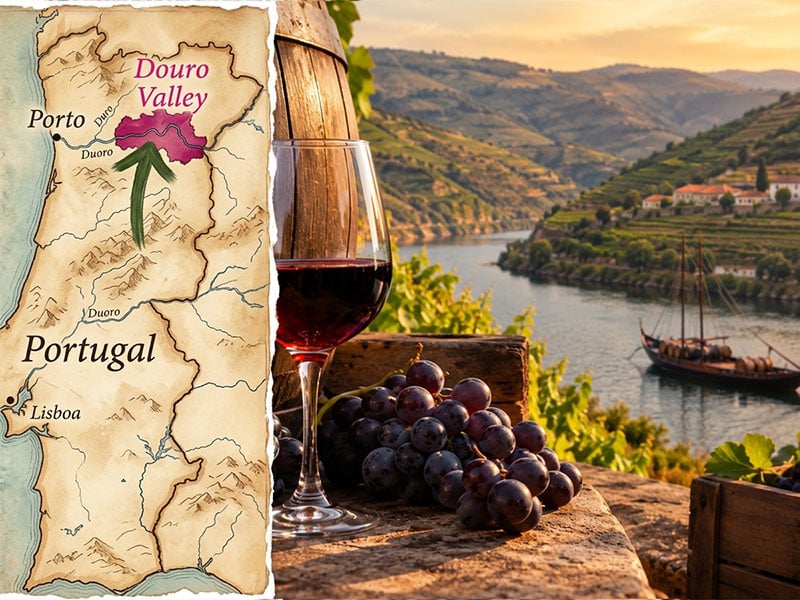
And then things get interesting. Port begins its life in Portugal’s Douro Valley, a landscape of steep hillsides, intense summer heat, and vineyards that seem to have been carved into the mountains rather than simply planted there. The grapes are traditionally harvested by hand, and Port is made from a collection of Portuguese varieties that you are unlikely to find filling supermarket shelves around the world.
Some are familiar to Port drinkers, Touriga Nacional, Touriga Franca, Tinta Roriz, Tinta Barroca and others, but the important thing is that Port has never been about one superstar grape. It is a team effort. Different varieties contribute fruit, floral notes, spice, structure and other characteristics that come together in the finished wine.
And yes, there is still a place for feet. Traditionally, grapes were, and in some wineries still are—crushed by foot in large granite tanks called lagars. It sounds charmingly old-fashioned until you remember that winemaking is happening in the middle of a hot harvest, and someone actually has to spend hours in there. But there is a reason for it: Port ferments for a relatively short period, so getting color, flavor and structure from the grape skins quickly matters.
Once the winemaker decides the fermentation has reached the right point, the spirit goes in. Fermentation stops, and the young Port begins its much longer journey. Originally, the wines stayed in the Douro before traveling downriver to Vila Nova de Gaia, where they were matured in the famous Port lodges. Once upon a time, that journey was made by barcos rabelos, the distinctive boats built to carry barrels of Port down the Douro. Today, the trip is considerably less romantic and considerably less likely to involve navigating river rapids.
But the destination still matters. In Gaia, the young wines are evaluated and their future begins to take shape. Some will spend their lives in ways that lead toward the familiar Ruby style. Others will follow a very different path toward Tawny. And those are only two doors into a much larger room.
Because here is the part that tends to surprise people: There isn't just one kind of Port.
There is a whole spectrum of styles, each shaped by choices about grapes, blending, aging, wood, time, and sometimes even the particular character of a vintage. Some are vibrant and fruit-driven. Others are all about the transformation that happens with years of aging. Some are made for sipping slowly after dinner. Others can be absolutely fantastic with food.
And once you start looking beyond the two names most people recognize, Port gets considerably more interesting.
Ruby. Tawny. Vintage. White. Rosé. And a few other styles that may make you rethink what you thought Port was supposed to be. So if your experience with Port begins and ends with “Ruby is red and Tawny is brownish,” congratulations—you have learned just enough to become dangerous.
Now come taste the rest of the story. Come catch a class with us at City Vino where we will deep dive into the history of port wine, specifically the Pacheca house. Get Tickets HERE

Comments
Be the first to comment...