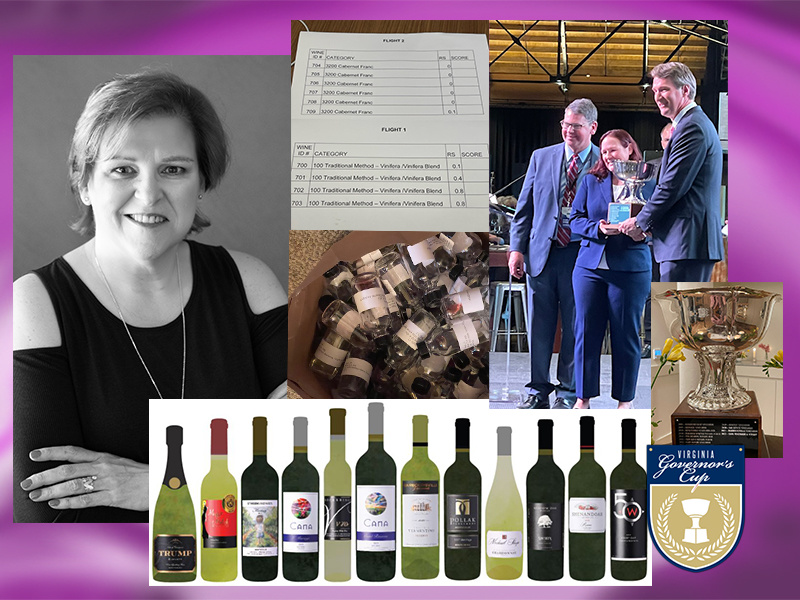
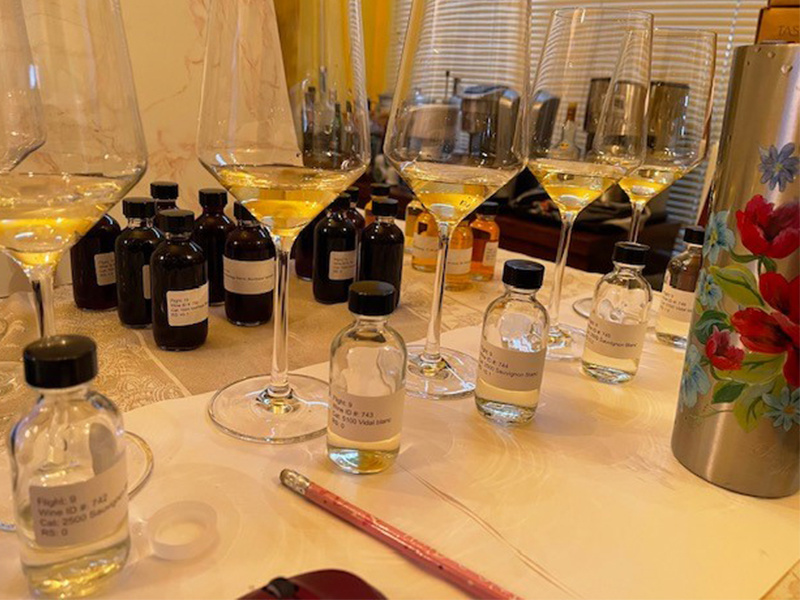
Last week’s blog, I (Kathy Wiedemann) Was a Judge for the Virginia Governor’s Cup 2022 - Part I, covered up to my pickup of the precious cargo which was the first 60-plus wines to be judged on day one of the final judging for the “best wines in Virginia.” I purposely put that in quote marks because not all wineries submit their wines to the cup competition. Their reasons for not submitting wines vary. Some wineries are not into competitions and medals. Others don’t have the required quantity of cases to hold back and make available after the competition is completed. I am sure there are many other reasons.
If you don’t throw an idea, thought, desire, dream, or goal out to the universe, it may never happen. That’s what I did early last year, in late January or early February 2021. A Facebook friend and former wine instructor of mine at Capital Wine School had posted a few photos of little vials of wine that she was tasting at home, as part of the judging for the Virginia Governor’s Cup competition. She holds the highest level in the Wine and Spirit Education Trust (WSET), and is a WSET instructor, and a high-level manager of a large wine distributor, and I replied to that post with an emphatic “A goal of mine is to be a judge in the competition.”
As I write this week’s blog, the temperatures are dipping to winter-like numbers, putting a bit of a delay on our spring mood, but this will pass soon. Spring is a time of rebirth – the early (yet somewhat fickle) surfacing of the crocuses and daffodils, the bright yellow sprigs of forsythia, and pink tinges of the cherry trees blooming all leading to an explosion of green everywhere.
This week’s tasting at City Vino features wines where there wasn’t really a particular theme in mind. I considered calling it a “Variety of Varieties,” until I realized that one of the wines was technically a blend of 85 percent of one grape, and 15 percent another. Though many places around the world, legally, the 85 percent means it can be labelled as the predominant grape variety without mentioning the secondary grape at all, but let’s stick to the non-themed theme, shall we?
When we think of certain grapes, we may immediately think of the specific country, region, or specific city, and it is often the place where the grape originated or first attained notoriety. The Albariño grape may lead you to think of Northwest Spain’s Rias Baixas region, and Pinot Noir may bring you to Burgundy, in France. If you shop wine store shelves, often you may see the name of a familiar grape, but from a place far away from the grape’s origins.
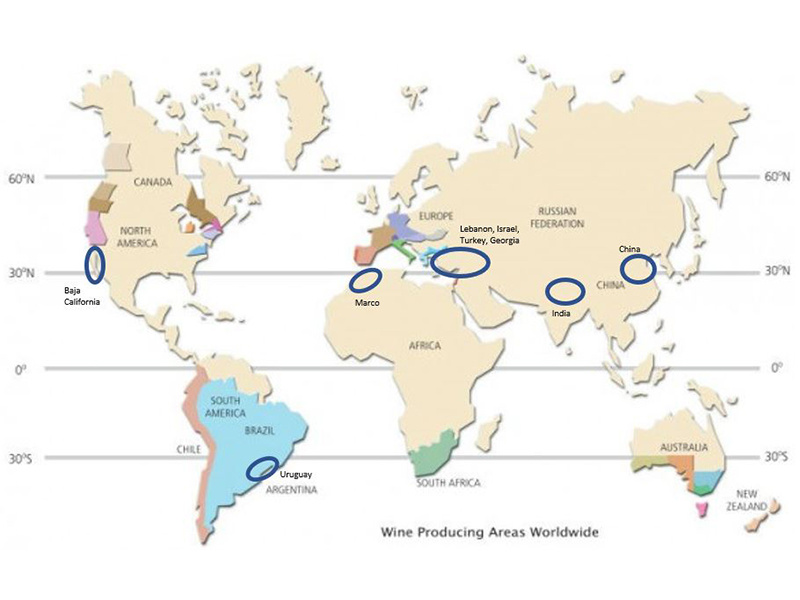
This week City Vino’s tasting will feature wines made with the grapes that will perhaps lead you to say (or at least think) “I didn’t know they grew that there.”