Cabernet Sauvignon’s parents are Cabernet Franc and Sauvignon Blanc. In the mid-1990s, Carole Meredith and John Bowers, at UC Davis, identified these grapes as the parents of Cabernet Sauvignon through DNA testing. The naturally occurring cross-pollination is estimated to have occurred as early as the 1600s.
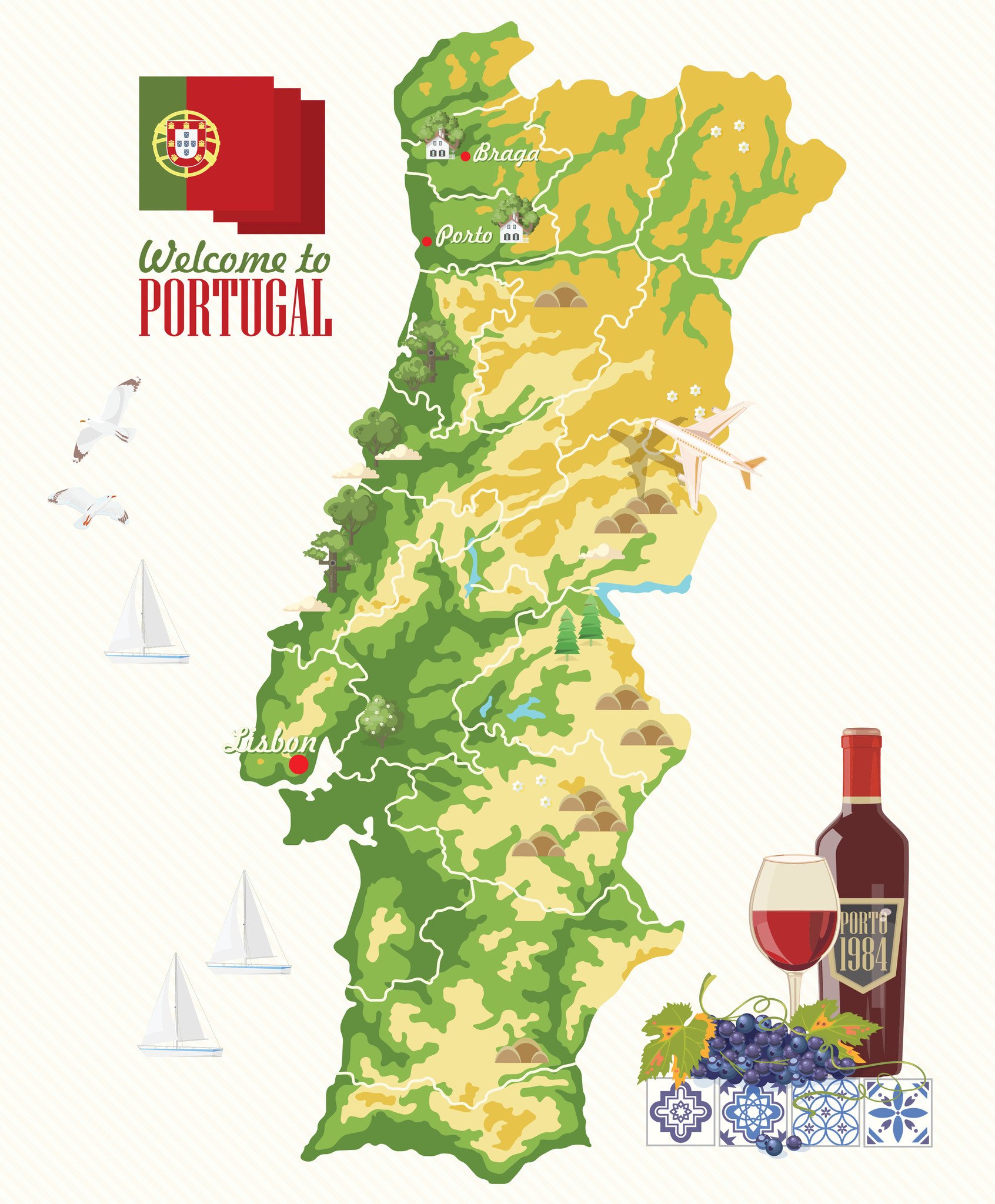
Discover the Portuguese varieties Castelão, Touriga Nacional, Tinta Roriz, or Tempranillo, Baga, Trincadeira, and Padeiro, as well as their growing regions!
The Côtes du Rhône is a grape-growing and winemaking designation within the Rhône Valley, in France. It is a broad designation, known as an Appellation d'Origine Contrôlée (AOC). AOCs have specific requirements when it comes to grape growing, grapes allowed, winemaking, and aging requirements, in order to have the AOC name on the label. Within the Côtes du Rhône AOC, there are nested AOCs, like Côtes-du-Rhône Villages AOC, and named village AOCs that cover smaller geographical areas, along with their own specific requirements.
This blog post marks the 100th weekly blog post that I’ve written for City Vino, and in celebration of that milestone, store owner Rita Allan suggested that I write about my “A-ha! wines”—the wines that got me interested in wine, that have impacted me, that have changed how I think about wine, and have left an indelible mark on me.
The most-planted red grape and overall, second-most-planted grape in Austria, is Zweigelt. Its origins date back to 1922, when Dr. Friedrich Zweigelt, of the Center for Viticulture and Horticulture at Klosterneuberg, cross pollinated St. Laurent with Blaufränkisch.